How an eMAR System Can Help Care Homes Reduce Medication Errors in 2026
Medication safety remains one of the most important responsibilities within care homes. Every day, nurses and care staff administer medicines that residents rely on for their health, comfort, and wellbeing. When medication is given correctly it supports treatment plans and improves quality of life. When mistakes occur, however, the consequences can be serious.
That is why medication management in nursing continues to be a central focus for healthcare providers in the UK. As we move into 2026, care homes face increasing pressures. Residents often have complex medication regimens, regulatory standards are tightening, and staff workloads remain high. The challenge is ensuring medication rounds remain safe, consistent, and well documented despite these pressures.
The reality is that medication errors remain one of the most common safety concerns in healthcare. According to the World Health Organisation, medication related harm accounts for around half of all preventable harm in medical care. In the UK, studies commissioned by the Department of Health and Social Care estimate that there are approximately 237 million medication errors each year in the NHS, highlighting the scale of the issue across the healthcare system.
For care homes, reducing these errors requires a combination of clear policies, effective training, and the right technology. Let us explore the key strategies care homes can use to strengthen medication safety in 2026.
Why Medication Errors Still Occur in Care Homes
Before addressing solutions, it helps to understand why medication errors happen in the first place. Most mistakes are not caused by negligence. Instead, they often result from a combination of environmental and system related factors.
Common causes include:
Miscommunication between healthcare professionals
Illegible handwriting on paper medication records
Distractions during medication rounds
High workloads and staff fatigue
Complex medication schedules
Delays in updating medication changes
In many care homes, residents take multiple medications each day. This situation, often referred to as polypharmacy, increases the complexity of medication administration. When several drugs must be administered at specific times and in specific doses, the margin for error becomes smaller.
This is why a strong nursing care plan for medication management is essential. A well structured care plan outlines each resident’s medication schedule, monitoring requirements, and administration procedures. It ensures that all staff members follow the same approach when delivering medication.
The Role of Nurses in Safe Medication Management
Nurses and trained care staff play a critical role in medication safety. They are the final checkpoint before a resident receives their medication.
Effective medication management in nursing involves more than simply handing out tablets. It requires staff to:
Check prescriptions carefully
Confirm the resident’s identity
Administer medication at the correct time
Monitor residents for side effects
Document each dose accurately
This responsibility requires clinical knowledge, attention to detail, and clear communication. It also requires systems that support staff rather than slowing them down.
Many care homes are now moving away from manual processes and toward medication management software that guides staff through medication rounds and improves record keeping.
Strengthening Medication Administration Policies
One of the most effective ways to reduce medication errors is to maintain a clear and practical medication administration policy.
Regulators such as the Care Quality Commission and guidance from the National Institute for Health and Care Excellence (NICE) emphasise the importance of robust medication procedures within care homes.
A strong medication policy should cover:
Ordering and receiving medicines
Safe storage procedures
Administration processes
Documentation requirements
Incident reporting and review procedures
Staff training and competency checks
When these processes are clearly defined and consistently followed, staff can administer medication with greater confidence and fewer errors.
However, even the best policies can be difficult to maintain when documentation relies solely on paper records.
The Limitations of Paper MAR Charts
For decades, care homes relied on paper based Medication Administration Records, commonly known as MAR charts. While familiar, these systems have several limitations.
Handwritten records can lead to:
Misread instructions
Missed signatures
Incomplete documentation
Delayed updates when prescriptions change
Paper records also make auditing difficult. Managers must manually review charts and paperwork to identify potential issues.
These challenges are one reason many care providers are transitioning to medication administration software that replaces paper MAR charts with digital records.
Digital systems help ensure medication documentation is accurate, clear, and immediately accessible.
How Medication Administration Software Improves Safety
Modern medication management software has transformed how care homes manage medication rounds.
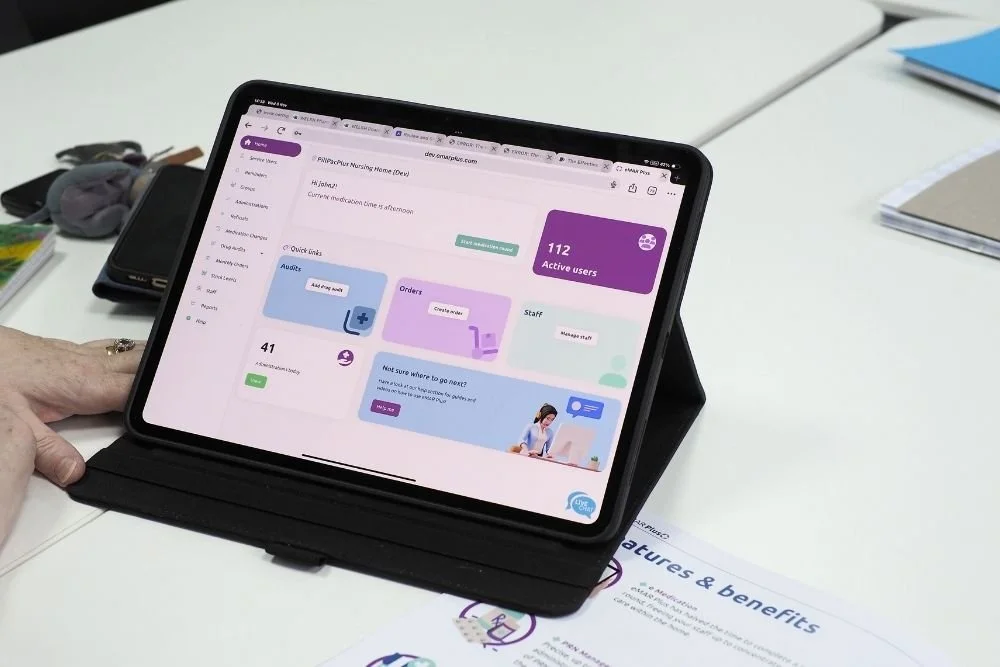
An electronic Medication Administration Record, often called an eMAR system, replaces handwritten documentation with secure digital records that update in real time.
With a digital system such as eMAR Plus, care teams gain several safety benefits.
Guided medication rounds
Medication administration software guides staff through each step of the medication round. The system displays which residents require medication and at what time, reducing the chance of missed doses.
Real time alerts
If a medication is overdue or missed, the system provides immediate alerts. These prompts allow staff to address issues quickly rather than discovering them later during audits.
Clear documentation
Digital records remove the risk of illegible handwriting. Each entry is clearly recorded and automatically time stamped.
Improved accountability
Every administration is linked to a specific staff member through secure login credentials. This creates a detailed audit trail that managers can review at any time.
Stock monitoring
Medication management software can track medication stock levels and notify staff when supplies are running low.
Together, these features support safer and more efficient medication rounds.
Supporting Nursing Workflows
Medication safety is closely linked to staff workflow. When nurses are rushed or frequently interrupted, the likelihood of errors increases.
Research shows that interruptions during medication rounds can significantly increase the risk of mistakes.
Care homes can improve medication safety by implementing practical workflow improvements such as:
Designated medication preparation areas
Scheduled medication rounds
Clear handover procedures between shifts
Minimising interruptions during administration
Technology can also help streamline workflows. Digital systems reduce the time spent documenting medication rounds and reviewing records.
In one independent study conducted at Antrim Care Home, the use of eMAR Plus reduced medication administration time by more than 50 percent, giving staff more time to focus on resident care.
This type of efficiency improvement can have a direct impact on safety.
Improving Communication Between Care Teams and Pharmacies
Another important aspect of medication safety is communication.
Medication errors often occur when instructions are misunderstood or when prescription changes are not communicated clearly between care homes, pharmacies, and prescribers.
Integrated digital systems help solve this issue by allowing medication updates to be shared instantly between healthcare providers.
For example, eMAR Plus works alongside PillPacPlus to support safer medication workflows. Pharmacy dispensing information and medication administration records remain aligned, reducing the risk of outdated instructions being followed.
This improved communication strengthens collaboration between care homes and pharmacies while supporting safer medication administration.
Real World Experience from Care Homes
Many care providers report noticeable improvements after adopting digital medication systems.
Siobhan Brammeld, Residential Manager at Massereene Manor, described how the system improved safety within her team:
“The system's real time alerts have helped prevent medication errors by notifying us if a dose is missed or administered incorrectly. This ensures that every resident receives their medication on time and exactly as prescribed.”
Experiences like this highlight how the right technology can support staff while improving outcomes for residents.
Preparing Care Homes for Medication Safety in 2026
Medication management will always require careful attention from care teams. However, the tools available today make it easier than ever to reduce risks.
Care homes that want to improve medication safety should focus on several key priorities:
Maintain clear medication administration policies
Provide ongoing training for staff responsible for medication rounds
Develop a structured nursing care plan for medication management
Improve communication between care teams and pharmacies
Implement reliable medication administration software
By combining strong policies with modern medication management software, care providers can significantly reduce medication errors and improve efficiency.
Supporting Safer Medication Management with eMAR Plus
At eMAR Plus, we work closely with care homes to simplify medication management while improving safety and compliance.
Our medication administration software is designed specifically for care providers, offering guided medication rounds, automated alerts, real time reporting, and full audit trails.
By reducing paperwork and supporting accurate documentation, eMAR Plus helps care teams focus on what matters most. Delivering safe, person centred care for every resident.