
Turning Medication Records Into Meaningful Management Information
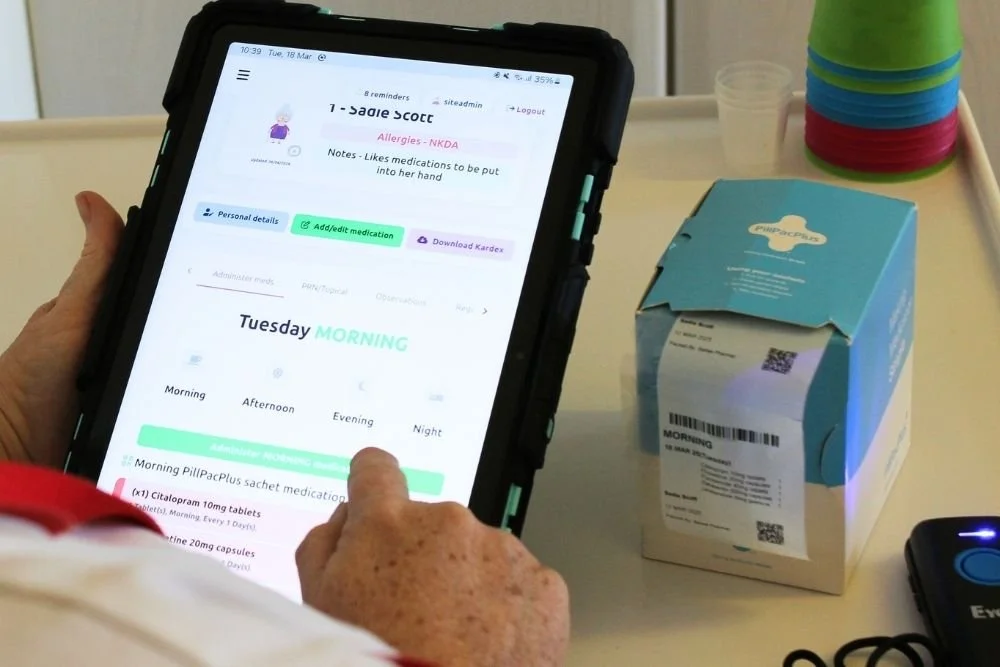
For years, medication records in care homes were treated as paperwork. Something that had to be completed, signed, filed away, and revisited only when there was a problem or an inspection looming. With traditional paper MAR charts, that approach made a certain amount of sense. They were static by design. They showed what had already happened, not what was about to happen.
But medication management in nursing has changed significantly. Residents are living with more complex conditions, medication regimes are more involved, staffing pressures remain high, and regulatory expectations have not eased. In this environment, simply recording that medication was given is no longer enough. What matters now is whether the systems in place actively help staff give the right medication, at the right dose, at the right time and provide clear, reliable evidence that this is happening.
This is where an electronic Medication Administration Record, or an eMAR system, fundamentally changes the role of medication records in a care home.
From Recording Medication to Preventing Errors
The most important shift introduced by an eMAR system like eMAR Plus is not reporting or analytics – it is prevention.
Paper MAR charts rely heavily on memory, manual checking, and handwritten interpretation. Even the most experienced and conscientious staff can make mistakes when they are busy, interrupted, or working under pressure. Late signatures, missed doses, or unclear documentation are rarely the result of poor intent. They are usually the result of systems that do not adequately support staff in real time.
Medication administration software changes this dynamic. Instead of asking staff to remember what is due and when, the system actively guides medication rounds. eMAR Plus clearly shows which medications are due, which are upcoming, and which are overdue. It applies safe time windows automatically and flags anything that falls outside them.
In practice, this means:
Medication times are system-led rather than manually interpreted
Staff are prompted step by step through each medication round
Doses cannot be accidentally signed for early or late without visibility
Missed medications are highlighted immediately, not discovered days later
This real-time guidance is critical. Many medication errors never occur at all because the system prevents them before they happen. That is the primary safety benefit of an eMAR system.
Embedding the Medication Administration Policy Into Daily Practice
Every care home has a medication administration policy. It defines how medicines should be ordered, stored, administered, documented, and reviewed. It sets out the five rights of medication administration, escalation routes, and staff responsibilities.
The challenge is not writing a policy – it is ensuring that it is followed consistently during busy, real-world medication rounds.
Paper systems depend on staff remembering and manually applying policy requirements each time. When workloads increase or staffing changes, consistency can slip.
Medication management software like eMAR Plus embeds the medication administration policy directly into daily workflows. Timing rules, prompts, alerts, and required checks reinforce policy automatically. Staff are guided to do the right thing at the right time, rather than relying on memory alone.
While eMAR systems provide guidance, prompts, and visibility, they sit alongside clinical expertise and established care processes. Decisions about medication remain the responsibility of appropriately trained staff.
This approach supports safer medication management in nursing by:
Reducing reliance on memory
Improving accuracy around medication timing
Supporting agency, bank, and newly onboarded staff
Creating confidence during disrupted or high-pressure shifts
How eMAR Supports Medication Care Plans
A strong nursing care plan for medication management goes beyond individual doses. It considers the resident’s overall needs, their medication regime, potential risks, and how medicines fit into daily care.
An eMAR system like eMAR Plus supports this by ensuring medication administration is accurate, timely, and clearly documented. Changes to prescriptions are reflected promptly, records are legible, and staff across shifts are working from the same up-to-date information.
Because medication records are captured consistently and in real time, nurses and managers can have greater confidence that the care plan is being followed as intended. This reduces the risk of unintentional deviations and supports continuity of care, particularly during handovers.
Real-Time Visibility Without a Culture of Blame
A common concern about digital systems is that increased visibility will lead to increased scrutiny. In practice, care homes using eMAR Plus often experience the opposite.
Because medication administration is guided and recorded in real time, issues are visible immediately rather than weeks later during an audit. This allows managers to intervene early and practically, while the context is still clear.
For example:
If evening medication rounds regularly overrun, this may indicate workload or staffing pressures rather than individual performance issues
If PRN medicines are being used more frequently, it may prompt a timely medication review
If certain times of day consistently cause delays, routines or schedules can be adjusted
The focus shifts away from asking “who made a mistake?” and towards “what is making this difficult to do safely?”. This is particularly important in medication management in nursing, where system pressures often play a significant role.
Turning Accurate Records Into Meaningful Management Information
Because eMAR Plus ensures medication administration is accurate by default, the information it produces is reliable. Time stamps are automatic. User identification is built in. Records are complete, legible, and made at the time.
This means that when managers review reports, they are reviewing trustworthy information rather than trying to reconstruct events from incomplete paper records.
Over time, this allows care homes to:
Review trends rather than isolated incidents
Understand where medication rounds place pressure on staff
Target training where it is genuinely needed
Demonstrate safe practice clearly during inspections
Importantly, these insights are a secondary benefit. They are valuable because the system first ensures safe medication administration at the point of care.
Medication Audits That Reflect Reality
Medication audits are often viewed as stressful because paper systems encourage retrospective checking. Staff may be asked to explain what happened weeks ago, sometimes with limited or unclear evidence.
With an eMAR system, audits become a reflection of everyday practice. Records are already complete, time-stamped, and auditable. Evidence does not need to be recreated – it already exists.
This supports regulatory expectations around clear, contemporaneous medication records and accountability, and makes inspections far less disruptive for staff.
Reducing Administrative Burden Through Medication Management Software
One of the biggest misconceptions about medication management software is that it increases bureaucracy. In reality, systems like eMAR Plus often reduce it.
By automating:
Medication schedules
Time stamps
Missed-dose alerts
Audit trails
The system removes duplication and manual reconciliation. Staff spend less time completing paperwork and more time focusing on resident care. Governance becomes part of the workflow rather than an additional task.
What This Means for Care Home Leaders
Medication management in nursing is no longer just a clinical task. It is a leadership responsibility, a governance issue, and a key indicator of care quality.
Care homes using an eMAR system like eMAR Plus are not simply digitising paper MAR charts. They are putting systems in place that actively support staff, reduce the risk of error, and strengthen compliance without adding pressure.
When medication administration software guides practice first and produces management insight second, everyone benefits, residents receive safer care, staff feel supported rather than scrutinised, and leaders gain confidence in their medication processes.
In today’s care environment, that shift is no longer optional. It is essential.
